
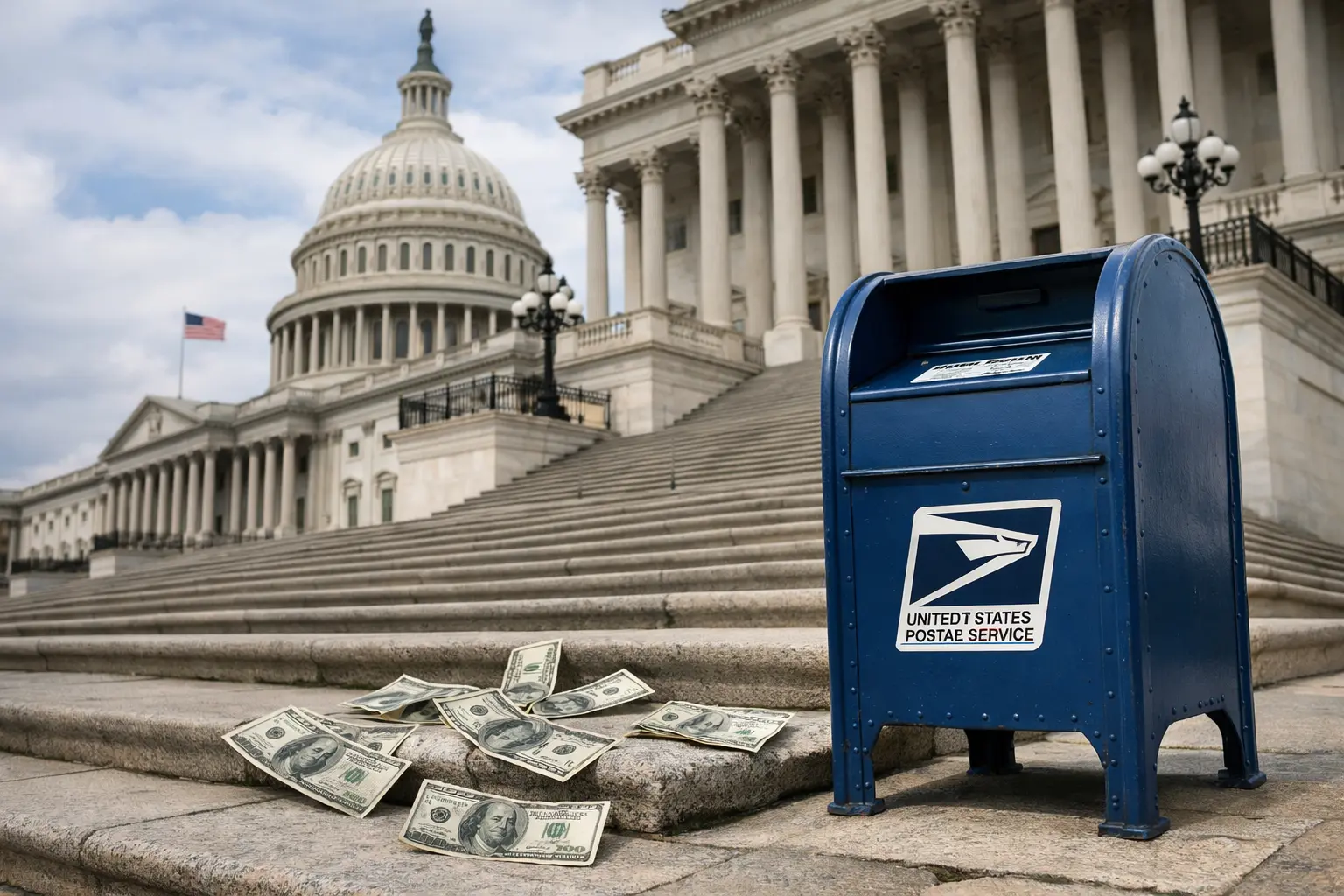
Overview: What are Trump’s $2,000 tariff checks?
President Trump has at times suggested sending Americans direct payments funded by tariffs on imports. The idea is to collect tariffs and return part of the revenue as $2,000 checks to households. To move from an idea to real payments requires a sequence of legal and administrative actions.
Key legal and political steps for Trump’s $2,000 tariff checks
Several distinct steps must happen before any tariff-funded $2,000 checks reach Americans. These steps involve Congress, federal agencies, and potentially the courts. Each step creates practical and political hurdles.
1. Congress must pass enabling legislation
Tariffs are typically collected under existing trade law, but distributing tariff revenue directly to households is not a routine federal program. Congress would need to write and pass a law that:
- Authorizes a specific program to distribute $2,000 checks.
- Defines eligibility rules (who gets a check and under what conditions).
- Specifies the funding source and reporting requirements.
Without clear statutory authority, the executive branch lacks a secure legal path to create mass payments from tariff receipts alone.
2. Funding and budget procedures
Even if Congress authorizes the program, the Office of Management and Budget (OMB) and congressional budget committees must account for the spending. That includes:
- Approving the use of tariff receipts or appropriating funds from the Treasury.
- Fitting the program into budget rules such as pay‑as‑you‑go (PAYGO).
- Setting oversight and audit provisions to track revenue and payouts.
Budget reconciling, offsets, or special scoring may be necessary before checks can be funded and paid out.
3. Administrative setup and agency actions
Once there is legal authority and funding, federal agencies must build an operational plan. That typically involves the Department of the Treasury and the Internal Revenue Service (IRS). Agencies must:
- Create eligibility databases and matching rules (for example, by SSN or tax filing status).
- Design payment systems for direct deposit, checks, or debit cards.
- Establish fraud prevention and customer service operations.
Standing up a program that sends millions of payments can take weeks to months, depending on scope and resources.
4. Potential legal and international challenges
Using tariff revenue to pay citizens could face lawsuits or trade objections. Possible issues include:
- Claims that the administration exceeded its authority if Congress did not explicitly authorize the payments.
- Trade partners or private parties challenging tariff use at the World Trade Organization or in U.S. courts.
- Disputes over who qualifies for payments and whether the policy violates equal protection or other laws.
Litigation can pause or block payments and may require fast legislative fixes to resolve.
Timeline and likely delays
There is no single timeline because the process depends on how quickly Congress acts and how complex the law is. A plausible sequence might take:
- Weeks to months for Congress to draft and pass legislation.
- Several weeks for the Treasury and IRS to prepare systems after legal authority and funds are confirmed.
- Additional months if litigation arises or if international disputes need resolution.
Realistically, expect months between passage of a law and widespread distribution of checks.
Practical challenges in distribution
Even with clear law and funding, practical issues can slow distribution. Those include incomplete taxpayer records for nonfilers, privacy and verification concerns, and the need to prevent duplicate payments. Agencies may rely on existing IRS mechanisms used for previous stimulus or tax credits to speed implementation.
Tariff revenue is collected by U.S. Customs and Border Protection and goes into the general fund unless Congress directs a specific use. Redirecting it to direct payments requires clear congressional authorization.
Example: How a $2,000 tariff check law might work in practice
Congress passes the “Tariff Relief Payment Act” authorizing $2,000 payments to qualified households funded by a designated portion of annual tariff revenue. The law defines eligibility as households with adjusted gross income under a set threshold and requires Treasury to use 2025 tariff receipts.
After passage, the IRS runs eligibility checks against tax returns and Social Security records. Treasury transfers funds to the Bureau of Fiscal Service, which issues direct deposits and paper checks. The whole process takes roughly 8–12 weeks from signing to initial payments, barring legal challenges.
Small real-world case study
In 2018, when tariffs on steel and aluminum were raised, businesses and trade groups pushed for clarity on how tariff revenue would be used. That episode showed how industry lobbying, congressional hearings, and agency guidance all influence how tariff policy translates into domestic programs.
It also demonstrated the time needed for agencies to adapt systems and for legal questions to be answered before new programs can operate at scale.
Bottom line: What needs to happen now
To get Trump’s $2,000 tariff checks into Americans’ hands, lawmakers must first create a lawful, funded program. That requires clear legislative language, budget approval, administrative planning, and likely time to address legal and logistical hurdles.
Even with strong political support, the sequence of congressional approval, appropriation, agency implementation, and possible litigation means payments are not immediate. Expect weeks to months between a law and the first distributions, and longer if disputes arise.
For citizens tracking progress, watch for: congressional bill text, OMB and Treasury guidance, IRS operational notices, and any court rulings that may affect timing or scope.